

Balance Problems in Older Adults: Why They Happen and What You Can Do
One day you step off a curb and feel a little unsteady.
Another day you get up from your favorite chair and catch yourself reaching for the armrest before you take a step.
Maybe nothing hurts. Maybe you're not even dizzy. You just don't feel as steady as you used to.
If that sounds familiar, you're in good company, and you're in the right place. Balance changes are common as we age, but "common" doesn't mean "nothing can be done." Most of the time it's the opposite. The trick is understanding what's going on, and then doing something about it before it starts shrinking your world.

What Could Be Causing Me to Feel Like I'm Losing My Balance?
Usually it isn't one thing. It's a few small changes stacking up: muscles that aren't as strong as they used to be, eyes that could use a new prescription, an inner ear having an off day, or a medication quietly doing more than the label lets on.
That's actually good news. Several small causes mean several small fixes, and most of them are things you can start on this week.
We'll get to the causes in plain English, and to the things you can do at home. But first, the part almost nobody explains.
The Fear Cycle (and Why Acting Early Matters)
Here's how balance trouble usually sneaks up on people, and it has very little to do with age on its own.
You feel a little unsteady. So, without really deciding to, you start moving less. You skip the walk. You take the elevator. You stop reaching up to the top shelf.
Moving less makes your muscles weaker. Weaker muscles make you more unsteady. More unsteady makes you more nervous. And around it goes.
That's the whole trap. It isn't that your body suddenly gave out. It's that fear quietly talked you into doing less, and doing less is what did the damage.
The good part is that the cycle runs both ways. Start moving a little more, and your muscles answer back. They do it at 60. They do it at 80. Your legs don't check your birth certificate before deciding whether to get stronger.
So if you take one thing from this article, take that. The earlier you nudge the cycle in the right direction, the easier it is to keep your confidence and your independence. Waiting is the only real mistake.
What Balance Problems Can Feel Like
When people hear "balance problem," they picture a dramatic fall. But it usually shows up much quieter than that, long before anyone hits the floor.
See if any of these sound like you:
- You touch the wall or the furniture as you move through a room, without really thinking about it.
- Stairs feel like they need more attention than they used to.
- You take shorter, more careful steps, especially on grass or an uneven sidewalk.
- You feel a beat behind when you turn around quickly.
- You've started watching your own feet.
- You feel "off," even when you're not dizzy and nothing hurts.
Why Balance Changes as We Age
Staying upright is a bigger team effort than most people realize. Your brain is constantly pulling in information from your eyes, your inner ears, and your muscles and joints, then making tiny corrections you never notice. When one of those players slacks off, you feel it.
Here's who tends to slack off, and what you can do about each.
Your muscles stopped pulling their weight
Somewhere after 50, muscle quietly slips away if you don't use it. The legs and core go first, and those are exactly the muscles that catch you when you misjudge a step. Doctors call this gradual loss sarcopenia. You can just call it the reason.
The good news bears repeating: this one responds to effort. Muscle rebuilds at any age. This is the single most fixable cause on the list, and the exercises further down go straight at it.
Your eyes are guessing
Your eyes tell your brain where your body is in space. When your prescription is out of date, or cataracts fog things up, your eyes start guessing at distances, and curbs and stairs get harder to judge.
Want proof of how much your eyes do? Stand next to a counter and try balancing on one foot with your eyes open. Now close them. That wobble is your eyes clocking out. The fix here is refreshingly boring: get your eyes checked, and keep your prescription current.
Your inner ear is having a moment
Deep in your ear is a tiny system of canals and fluid that tells your brain which way is up. When it acts up, the world can spin or tilt for no reason.
One common version has an intimidating name: benign paroxysmal positional vertigo, or BPPV. Forget the name. What you'd actually notice is simple: the room lurches for a few seconds when you tip your head back or roll over in bed. It's caused by tiny crystals drifting where they shouldn't. And here's the reassuring part. It's often fixed quickly with a simple head-repositioning move a doctor or physical therapist can walk you through. Sometimes one visit does it.
A medication is doing more than advertised
This one catches a lot of people off guard. Plenty of common medications list dizziness or unsteadiness as a side effect, and the more prescriptions you take, the higher the odds they're tripping over each other.
The usual suspects include blood pressure pills, sleep aids, sedatives, some antidepressants, and certain diabetes medications. If your balance changed after you started something new, that's worth a conversation. Never stop a prescription on your own, but do bring your full list to your doctor and ask, "Could any of these be why I feel off?"
Your blood pressure drops when you stand
Ever stand up and feel the room go swimmy for a second? That's often a quick dip in blood pressure. A brief wobble that clears fast is usually nothing. If it happens a lot, mention it. The simple habit that helps most people: get up in stages. Sit on the edge of the bed for a moment before you rise, and let your body catch up.
When Balance Problems May Be Serious
Let's be clear about the line, because most balance changes are gradual and manageable, but a few are not, and knowing the difference is its own kind of safety.
Get medical help right away if a balance problem comes on suddenly or arrives with any of these:
- Slurred speech or trouble getting words out
- Weakness or numbness on one side of the body
- A sudden, severe headache
- Sudden vision changes or double vision
- Sudden confusion
- Chest pain or a racing, irregular heartbeat
These can signal something urgent like a stroke, and minutes matter. This isn't a "wait and see" list.
And one plain rule that's easy to remember: if you've had a fall, tell your doctor, even if you feel fine and even if you'd rather not. A fall is information. It's much better used as a warning than ignored until the next one.
If your unsteadiness is far enough along that you want a professional to measure it, physical therapists and rehabilitation doctors can formally assess your balance and build a plan around the results. This deeper look at how that assessment works is a heavier read than this article, but it's reassuring: it shows that even serious balance trouble has a real path forward.
For the gradual stuff, the everyday unsteadiness this article is really about, you have more time and more options than the scary version suggests. Here's where you start.
Balance Exercises You Can Do at Home
You don't need a gym or any equipment for these. You need a sturdy chair or a countertop within arm's reach, and a few minutes most days. Keep support close, go slow, and stop if something hurts.

Stand on One Foot
Hold the back of a sturdy chair. Lift one foot an inch off the floor and hold steady for 10 to 30 seconds, then switch. This is the one exercise that trains your balance most directly. Over a few weeks, you'll notice you need the chair less.
Heel-to-Toe Walk
Walk a straight line placing the heel of one foot right in front of the toes of the other, like you're on a tightrope painted on the floor. Keep a wall within reach. This sharpens the coordination that keeps you tracking straight instead of drifting.
Sit-to-Stand
Sit in a firm chair and stand up without using your hands, then lower back down with control. This is the old fitness-legend classic, and it's beloved for a reason: it builds the exact leg strength you use every single day, dozens of times, without you thinking about it. Aim for 8 to 12, and build from there.
March in Place
Standing near the counter, slowly lift one knee, then the other, like a slow-motion march. This gets you comfortable shifting your weight from leg to leg, which is what walking really is once you break it down.
A handful of reps of each, most days, adds up faster than people expect. Consistency beats intensity, same as everything else worth doing.

Tools and Activities That Can Help
Exercises are the foundation. But a few well-chosen tools and gentle activities can make it easier, safer, and honestly more enjoyable. Here's the plain-English rundown of what's out there and who each one actually suits.
Supportive Walking Shoes
Look for a firm sole with real grip, a snug fit, and a low heel. Skip the soft, squishy soles that feel like clouds; they actually make it harder to feel the ground. This is the cheapest, easiest upgrade on the list, and for some people it's the only one they need.
Walking Poles
Think ski poles for solid ground. Two extra points of contact mean two fewer chances to wobble on an uneven path.
They do something a cane doesn't. They keep you upright and moving at a normal pace with your arms working, instead of leaning to one side. And plenty of folks who'd feel self-conscious with a cane take to poles happily, because poles read as "out for a good walk," not "unsteady." Great for trails, gravel, or longer strolls where a little extra confidence goes a long way.
A Balance Pad
This is the gentle way to make your at-home exercises do more. A balance pad is a firm foam cushion. Standing on it makes the surface slightly unstable, so your legs and ankles have to work a little harder to keep you steady, which is exactly the muscle you're trying to wake up.
It's low-cost, low-drama, and easy to tuck away. Do your one-foot stands next to a counter with the pad underfoot, and you've quietly turned an easy exercise into a better one. A good starting point for most people.
A Vibration Plate
Here's a less familiar one, and one I'll be straight with you about because I use it myself. A vibration plate is a platform that vibrates gently while you stand on it, which makes your muscles fire many times a second without you doing much. Some people find it a convenient, low-effort way to add muscle engagement to a routine.
Now the honest part. It's the priciest option here, and because it moves under you, treat it with respect: hold the handle or a nearby rail, start with short sessions, and check with your doctor first if you have a pacemaker, a recent joint replacement, or a condition affecting your circulation. Used sensibly, it's a nice tool. It is not a magic platform that balances for you, and anyone who tells you otherwise is selling something.
Chair Yoga
Yoga without the part where you have to get down on the floor and back up. Chair yoga adapts the stretches and gentle poses so you can do them seated or holding the chair.
It builds flexibility and posture, and it makes you more aware of your body and how it moves. That awareness helps you stay steady on your feet. It's approachable, forgiving, and a good entry point if the word "exercise" makes you tired just hearing it.
Tai Chi
If you do one guided activity for balance, this is the one with the best track record. Tai chi is a slow, flowing series of movements, sometimes called "meditation in motion," and it's been studied specifically in older adults for reducing falls.
The slow weight-shifting is basically balance training in disguise, and most people find it calming rather than strenuous. Community centers and libraries often run free or cheap classes, and there are gentle follow-along videos if you'd rather start in your living room.

Staying Ahead of It: Prevention for the "Not There Yet" Crowd
Maybe your balance is fine, and you'd like to keep it that way. Smart. The best time to work on balance is before you feel like you need to, and it takes less effort than fixing it later.
The short version is: keep moving, and don't let your legs get lazy. A daily walk, a few sit-to-stands while the coffee brews, current glasses, enough water (dehydration makes people wobbly and they never suspect it), and a quick once-over of your home for the classic troublemakers: loose rugs, dark hallways, that one cluttered step.
None of it is dramatic. That's the point. Small, boring, consistent habits keep the fear cycle from ever starting.
Frequently Asked Questions
1. Can balance be restored in older adults?
2. Why am I suddenly off balance when walking?
3. Why do I feel off balance but not dizzy?
Very common, and telling. When there's no spinning or dizziness, the cause is often in your muscles and joints rather than your inner ear. Weak legs, stiff ankles, or fading position sense make you feel unsteady without making the room move. That points straight at strength and balance work.
4. What is the best exercise to improve balance in seniors?
There's no single winner for everyone, but standing on one foot is the most commonly recommended exercise because it trains balance directly while strengthening the small muscles that keep you steady. Sit-to-stands are a close second for building the leg strength underneath it all.
5. How long should a 70-year-old be able to stand on one leg?
It varies widely from person to person, so don't turn it into a test you can fail. Many healthy older adults manage several seconds or more per side. What matters far more than any number is whether it's getting better or worse for you over time.
Final Thoughts
Balance problems don't show up overnight, and better balance doesn't either. Both are built one day at a time.
The encouraging part is how much is in your hands. A few minutes of exercise most days, current glasses, a look at your medications, a clear path through your living room, and you've already turned the fear cycle around.
The goal was never perfection. It's keeping the steadiness and confidence to keep doing the things you like, on your own two feet.
If you've started noticing changes, don't wait them out. Small steps today are worth a great deal tomorrow.
Not sure where to start? Take a look at the suggestions below.
Recommended Products
As an Amazon Associate, I earn from qualifying purchases.
| Orthofeet Nira Orthopedic Women's Sneaker | |
 |
Hands-free slip-on stretchable walking shoes with soft padded ergonomic cushioning. |
| TrailBuddy Trekking Poles for Women, Men & Seniors | |
 |
Folding trekking poles provide stable support for seniors, hikers, and anyone looking for extra confidence with each step. |
| Lifepro Waver Vibration Plate Exercise Machine | |
 |
The Lifepro Waver vibration plate is for whole-body wellness, activating muscles, enhancing circulation and daily movement. |
| Chair Yoga for Seniors Over 60 | |
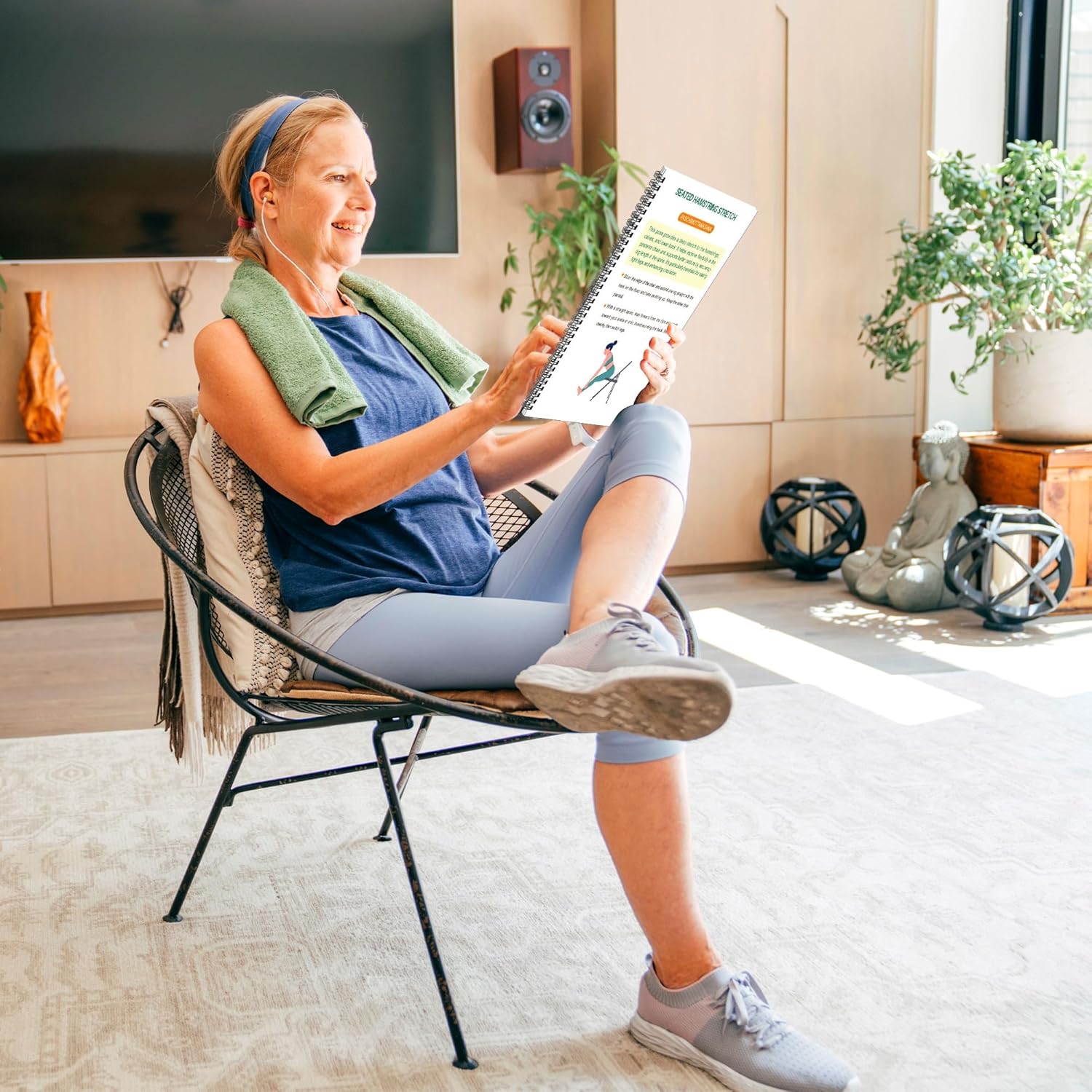 |
A Book & Chart (8.5 x 11) with 18 easy seated yoga poses with clear instructions, benefits, and senior-friendly modifications. |
| Tai Chi for Seniors: The Complete 10-Min-a-Day Workout | |
 |
Build better balance, reduce stiffness, and move with confidence in 10 minutes a day for senior adults |
10 Brain Games for Seniors to Keep Your Mind Sharp
You know the moment. You walk into the kitchen with real purpose, stop in the middle of the floor, and haven't the faintest idea why you're there.
The good news: that's usually your brain being busy, not broken. The better news is that keeping it sharp doesn't require anything clinical or expensive. Often it just requires a puzzle and a cup of coffee.

How do you keep your mind sharp as you age?
Short version: variety. No single activity does the whole job.
A sharp mind is fed by decent sleep, regular movement, staying connected to other people, learning the occasional new thing, and giving your brain a proper workout. Brain games handle that last part, and they happen to be the most enjoyable item on the list. Nobody ever looked forward to "get eight hours of sleep" the way they look forward to finishing a tricky crossword.
The trick isn't finding the one perfect game. It's finding a couple you like enough to come back to. Consistency beats intensity every time. Fifteen minutes most days does far more than a marathon session once a month that leaves you cross-eyed.
What makes a good brain game for seniors?
Not every game earns its place. The ones worth your time tend to share a few traits:
- Easy on the eyes. Large print or an adjustable screen, no squinting.
- No clock. You play at your own pace, with nothing breathing down your neck.
- Works either way. On your own, or at the table with someone.
- A satisfying finish. That small, real "done" at the end.
If a game is a chore to read or stresses you out, it's the wrong game, no matter how good it's supposed to be for you.
With that in mind, here are ten brain games for seniors that fit the bill.
1. Crossword Puzzles
If brain games had a hall of fame, crosswords would already have a plaque. And they've earned it. Of all the games on this list, they're the ones researchers keep circling back to, with some studies suggesting regular solvers hold off memory decline by a couple of years.
But forget the studies for a second. What makes a crossword satisfying is the way an answer surfaces from nowhere. A clue you stared at blankly over breakfast suddenly clicks in the grocery line, and it feels like your brain did it behind your back.
They come in every size and difficulty. Start where it's fun, not where it's humbling. A large-print book keeps the whole thing comfortable, and unlike the app version, nothing pings at you.
2. Sudoku
This is the one for people who see a word puzzle and freeze. No vocabulary, no trivia, no "who wrote that novel again." Just numbers.
And despite the grid full of digits, there's no math involved. The job is simply to fill every row, column, and box with the numbers 1 through 9, no repeats. It's pure logic, and it scales from a gentle warm-up to a puzzle that will keep you parked in your chair longer than you planned.
Most people find a comfortable difficulty and settle in happily. A good large-print book with plenty of puzzles will last you weeks.

3. Trivia Games
Trivia has a lovely party trick: it pulls up things you didn't know you still knew. The capital of some country you visited in 1974, a one-hit wonder, the year a film came out. It's all in there, and trivia goes and fetches it.
It's also the most social game here. Play it with family, with friends, with the grandchildren who assume you won't know a thing (correcting them is half the fun).
Best of all, one question tends to spark a story, and the story sparks another. That's a workout your brain enjoys without noticing.
4. Chess
Chess is the deep end of the pool. You think several moves ahead, read what your opponent is up to, and adjust when they do something you didn't expect. Few games ask this much of you, which is exactly why people who love it never run out of road.
It does take a while to learn, so be honest about whether that appeals or exhausts you.
If it's the second one, checkers is the gentler cousin. Same board, far simpler, and easy on the hands and eyes with a large set. You still get the planning and the back-and-forth, without the steep climb.
5. Scrabble
Scrabble is where vocabulary meets a little healthy scheming. You're not just making words. You're making them land on the right squares to rob your opponent of the good ones.
It quietly stretches your spelling and word recall, and it rewards the sort of sideways thinking that turns seven awkward letters into something that scores.
Being a two-player game, it's social by design. It's a fine excuse to get a friend or a grandchild across the table, and a fine chance to remind them who's boss.
6. Jigsaw Puzzles
Not every workout needs to be loud. A jigsaw is the quiet one. No thinking out loud, no keeping score, just you, a thousand pieces, and the small triumph of finding the one you've been hunting for twenty minutes.
It trains visual attention and patience, and most people find it genuinely relaxing. You can leave it out on a table and drift back to it whenever the mood strikes.
Large-piece puzzles are the pick for older adults. They're kinder on the hands and easier to see, and they don't sacrifice a bit of the satisfaction.
7. Memory Matching Games
This one does exactly what it says. Cards face down, and you turn them two at a time trying to find the pairs, which means remembering where you saw that matching card three turns ago.
The rules take about ten seconds to learn. The challenge grows quietly as you add more cards, and it targets recall more directly than almost anything else here.
It also plays beautifully across generations. Set it up with the grandkids, and you may be surprised who wins, which is either delightful or slightly humbling depending on the day.
8. Bingo
Don't let its reputation fool you. Bingo looks like pure luck, but there's real work happening under the hood: listening for the call, scanning the card, and marking the right square before the next number lands.
That combination of attention and quick recognition is a better mental exercise than it gets credit for.
And it's wonderfully social. Whether it's a room at the community center or a game around the kitchen table, bingo gives you company along with the workout, which is no small thing.
9. Word Search
Some days you want a challenge. Some days you just want something pleasant that still keeps the gears turning. Word search is the game for the second kind of day.
There's no pressure and no strategy, just hidden words waiting in a grid of letters. It sharpens focus and pattern recognition while asking very little in return.
Large-print books make it even easier to sink into. It's the perfect low-energy option, and there's no shame in that.
10. Brain Training Apps
Now for a bit of honesty. If you enjoy a tablet or phone, brain-training apps are a convenient way to squeeze in short daily exercises for memory, attention, and speed.
But keep expectations sensible. No single game, app or otherwise, has been proven to be the answer to a sharper mind. The research is encouraging, not magic. The smartest approach is simply to vary what you do, which these apps make easy with their grab-bag of quick challenges.
Handy for a few minutes here and there. Just don't let the screen crowd out the crossword and the card table.
What are some good brain activities for senior citizens?
- Read every day. A book, a newspaper, a magazine. New ideas keep the mind limber.
- Learn something new. A language, an instrument, a recipe, a craft. The learning itself is the workout.
- Join a book club. You get the reading and the good conversation in one sitting.
- Stay social. A real chat with a real person does more for your head than most people realize.
- Keep moving. A daily walk gets the blood flowing, brain included. Body and mind are on the same team.

Frequently Asked Questions
1. What is the best brain game for seniors?
The honest answer: the one you'll actually play. The best brain games for seniors are the ones you enjoy enough to come back to next week, whether that's crosswords, Sudoku, chess, or memory games. Pick for pleasure, not obligation, and consistency takes care of the rest.
2. Can brain games improve memory?
They can certainly challenge it and keep it engaged, and some, like crosswords, have research suggesting real benefits over time. No game guarantees a sharper memory, but regularly exercising your brain is a healthy habit by any measure.
3. How often should seniors play brain games?
Little and often wins. Fifteen to thirty minutes on most days does more good than a rare marathon session. Mixing it up helps too, since a card game and a word puzzle work slightly different parts of your brain.
4. Do I need a computer or phone to play?
Not at all. Plenty of the best options, like crosswords, Sudoku, jigsaws, cards and bingo, work perfectly well on paper or around a table. Apps are a convenient extra if you like them, not a requirement.
Final Thoughts
Don't overthink this. You don't need all ten games, a strict schedule, or the "best" one according to some study.
Pick a couple that sound like fun, and commit to trying them for a few minutes at a time. The game you enjoy is the one you'll actually come back to, and that's what matters.
Not sure which one's for you? Take a look at the suggestions below to get started.
Recommended Products
As an Amazon Associate, I earn from qualifying purchases.
| Remember That?! Crossword Puzzle Book For Adults & Seniors | |
 |
Keep your mind tack-sharp and relive nostalgic memories from the 1950s-1990s. |
| Easy Classic Sudoku for Seniors | |
 |
Large Print (8.5 x 11) vintage sudoku puzzles for relaxing cognitive exercise. |
| Memory Activity Workbook for Seniors | |
 |
100 easy large print brain games to Improve memory, boost focus & support cognitive health. |
| Trivia for Seniors: 400 Multiple-Choice - 50s-90s Events | |
 |
Large print activity quiz book to challenge your memory and keep your brain young. |
| Nostalgic Word Search for Adults & Seniors | |
 |
Large print word search puzzles for sparking memories and staying sharp. |